

Getting hurt at work is hard enough. Finding out your employer doesn't have workers' compensation insurance makes an already difficult situation feel completely overwhelming.
If your employer has no workers' comp insurance, you may be wondering whether you have any options at all. The answer is yes. Illinois law provides specific protections for workers in exactly this situation, and injured employees have more legal options than they realize.
Workers' compensation insurance is required for nearly all employers in Illinois. When an employer fails to carry it, they are breaking the law, and they can be held accountable. At the same time, injured workers still need to understand their rights, act quickly, and get the right legal help to pursue the compensation they deserve.
In this article, we'll explain what happens when an employer doesn't have workers' comp insurance, what legal options may be available to you, how the Illinois Workers' Compensation Commission handles these situations, and how an experienced workers' compensation attorney can help protect your rights.
Is Workers' Comp Insurance Required in Illinois?
Yes. Under the Illinois Workers' Compensation Act, virtually every employer in Illinois is required to carry workers' compensation insurance. This applies to businesses of all sizes, including those with just one employee. The law covers full-time workers, part-time workers, and in many cases, seasonal employees as well.
There are very few exceptions to this requirement. Sole proprietors with no employees, certain agricultural workers, and some other narrowly defined categories may be exempt. But for the vast majority of Illinois workers, their employer is legally obligated to carry coverage.
The bottom line: if you were hurt on the job and your employer tells you they don't have workers' comp, that is not a dead end. It is a violation of Illinois law, and it opens the door to legal remedies that may not exist in a standard workers' comp case.
What Employers Risk When They Don't Carry Coverage
Employers who operate without workers' compensation insurance face serious consequences under Illinois law. The Illinois Workers' Compensation Commission (IWCC) has the authority to impose significant penalties, including:
- Substantial civil fines that can accumulate quickly
- Criminal charges, depending on the circumstances
- A stop-work order that shuts down all business operations until coverage is obtained
- Personal liability for the employer to pay compensation owed to an injured worker
These consequences exist because the law takes this obligation seriously. An employer's failure to carry insurance does not eliminate an injured worker's right to compensation. It shifts how that compensation is pursued.
What Happens If Your Employer Doesn't Have Workers' Comp Insurance?
When an employer has no workers' comp insurance and an employee gets hurt, the situation is more complicated than a standard claim, but it is far from hopeless. Illinois law gives injured workers specific tools to pursue compensation even when their employer failed to follow the rules.
Here is what typically happens and what options may be available.
You Can Still File a Claim with the IWCC
Even if your employer has no workers' comp insurance, you can still file a claim directly with the Illinois Workers' Compensation Commission. The IWCC has jurisdiction over these cases and can order your employer to pay compensation out of pocket.
This is an important distinction. In a normal workers' comp claim, the insurance company handles the payment. When there is no insurance, the employer becomes personally responsible for all benefits owed, including medical expenses, wage replacement, and disability compensation.
Filing with the IWCC creates an official record of your claim and puts the legal process in motion. Your employer will be notified, and the Commission will oversee the process of determining what compensation you are owed.
The Illinois Uninsured Employers Fund
Illinois also maintains the Injured Workers' Benefit Fund (IWBF), which was created in 2005 specifically to help workers whose employers illegally failed to carry workers' comp coverage.
If your employer cannot pay the compensation ordered by the IWCC, the IWBF may step in to cover those benefits. This is a critical safety net that many injured workers don't know exists.
This does not mean the process is automatic or simple. There are steps that must be followed, deadlines that apply, and documentation that will be required. An attorney can help you navigate this process and make sure your claim is handled correctly.
You May Be Able to Sue Your Employer Directly
One of the most significant differences between a standard workers' comp case and a case involving an uninsured employer is the ability to file a civil lawsuit.
In a typical workers' compensation situation, employees generally cannot sue their employer in civil court. Workers' comp is considered the exclusive remedy. However, when an employer does not have workers' comp insurance, that protection may no longer apply.
This matters because a civil lawsuit can potentially recover damages that go beyond what workers' comp normally provides. In a civil case, you may be able to pursue compensation for:
- Full lost wages, not just the partial wage replacement offered by workers' comp
- Pain and suffering
- Emotional distress
- Other damages tied to the full impact of your injury
The ability to sue directly can make a significant difference in the total compensation available to an injured worker. That said, these cases can be complex, and the outcome depends on the specific facts involved. Speaking with an experienced workers' compensation attorney is essential before deciding how to proceed.
Third-Party Claims May Also Apply
In some workplace accidents, someone other than the employer may share responsibility for the injury. A defective piece of equipment, a negligent contractor, an unsafe product, or a dangerous property condition could all contribute to what happened.
When a third party is involved, an injured worker may be able to pursue a separate personal injury claim in addition to the workers' comp process. These claims are not affected by the employer's insurance status and can provide additional compensation for the full impact of the injury.
An attorney can evaluate whether a third-party claim applies in your situation and help you pursue every available avenue for recovery.

What to Do If You're Injured & Your Employer Has No Workers' Comp
If you've been hurt at work and discovered that your employer has no workers' comp insurance, the steps you take in the days and weeks that follow matter. Acting quickly and carefully can protect your rights and strengthen your position no matter which legal avenue you pursue.
Step 1: Get Medical Treatment Right Away
Your health comes first. Seek medical attention immediately, even if the injury seems minor. Make sure your doctor knows the injury happened at work so it is properly documented as job-related. Keep copies of all medical records, treatment notes, prescriptions, and bills. This documentation will be essential to your claim.
Delays in seeking treatment can give an employer or opposing party room to argue that the injury was not serious or was not connected to your job. Getting care promptly creates a clear and credible timeline.
Step 2: Report the Injury to Your Employer in Writing
Notify your employer about the injury as soon as possible and do it in writing. Reporting the injury creates a record that cannot be disputed later. Include the date, time, location, and details of how the injury occurred.
Even if your employer has no insurance and you suspect they may not cooperate, this step is still important. It establishes that you gave proper notice, which is a legal requirement under Illinois law.
Step 3: Verify Your Employer's Insurance Status
You can check whether your employer carries workers' comp coverage through the IWCC. If you have reason to believe coverage does not exist, confirming this early helps determine which legal path makes the most sense for your situation.
An attorney can also help verify coverage and investigate the employer's history with the IWCC, including whether they have faced prior violations.
Step 4: File a Claim with the IWCC
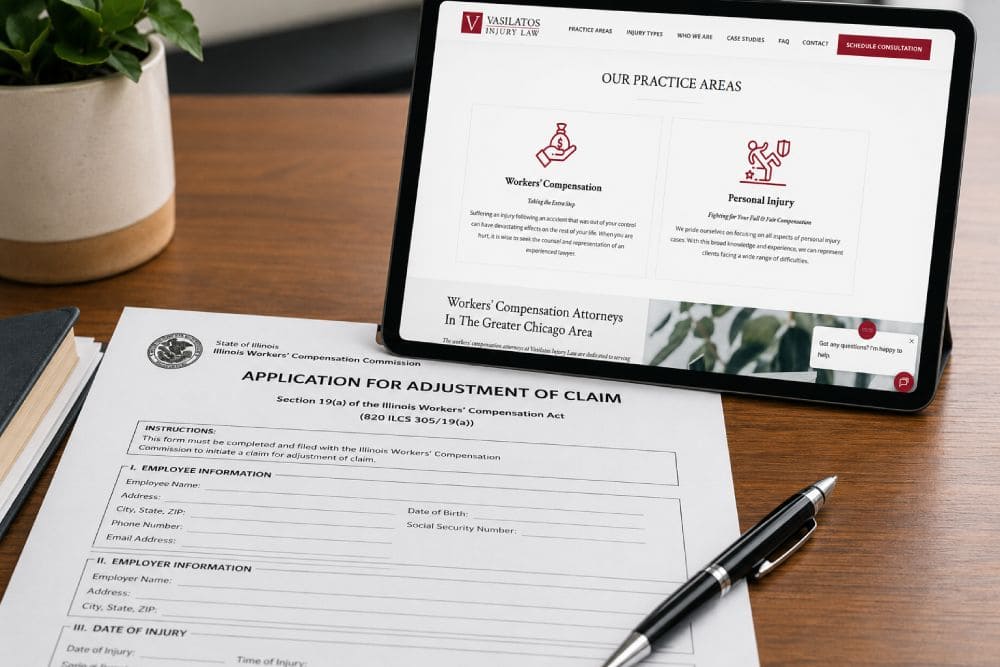
File an Application for Adjustment of Claim with the Illinois Workers' Compensation Commission. This is the formal step that puts your case on record and initiates the legal process, regardless of whether your employer has insurance.
You can download the form from the IWCC website or work with an attorney who will handle the filing for you. Once submitted, the IWCC will notify your employer and the process begins.
Important: Illinois law requires you to notify your employer within 45 days of the injury. The deadline to file a formal claim with the IWCC is generally three years from the date of injury, or two years from the last payment of benefits, whichever is later. Missing these deadlines can affect your right to compensation.
Step 5: Consult an Experienced Workers' Comp Attorney
Cases involving uninsured employers are more legally complex than standard workers' comp claims. There are multiple potential avenues for recovery, including the IWCC process, the Uninsured Employers Fund, a direct civil lawsuit against the employer, and potentially third-party claims.
Consider hiring a workers’ comp attorney. An experienced attorney can evaluate all of your options, advise you on the strongest path forward, and handle the legal process while you focus on recovering. Most workers' compensation attorneys, including the attorneys at Vasilatos Injury Law, work on a contingency basis, meaning you pay nothing unless they recover compensation for you.
Step 6: Document Everything
Keep organized records throughout the entire process. This includes:
- Medical records, bills, and treatment notes
- Written communications with your employer
- Pay stubs and records of lost income
- Photos of the accident scene or your injuries
- Names and contact information of any witnesses
- Any notices or correspondence from the IWCC
Strong documentation protects your claim at every stage and gives your attorney the best possible foundation to work from.
What Compensation May Be Available to You?
The compensation available in an uninsured employer case depends on which legal avenue you pursue. In some situations, injured workers may be able to recover more than they would in a standard workers' comp claim because the civil lawsuit option becomes available.
Here is a breakdown of the types of compensation that may apply.
|
Type of Compensation |
Standard Workers' Comp |
Uninsured Employer Case |
|
Medical expenses |
Covered |
Covered through IWCC or IWBF |
|
Wage replacement |
Partial |
Partial through IWCC/IWBF; full wages possible in civil suit |
|
Permanent disability |
Covered |
Covered through IWCC/IWBF |
|
Pain and suffering |
Not available |
May be available in civil lawsuit |
|
Emotional distress |
Not available |
May be available in civil lawsuit |
|
Vocational rehabilitation |
Covered |
Covered through IWCC/IWBF |
What this means for you: if your employer has no workers' comp insurance, the path to compensation is more complicated, but the total recovery available may actually be broader. A civil lawsuit can reach damages that workers' comp never could.
That said, not every case will result in a successful civil lawsuit. The employer's ability to pay, the strength of the evidence, and the specific facts of the injury all play a role. An attorney can help you assess the realistic options and the likely outcomes in your situation.
What If the Employer Cannot Pay?
This is one of the most common concerns injured workers have in these situations. Even if the IWCC orders an employer to pay compensation, there is no guarantee the employer has the financial resources to comply.
This is exactly where the Illinois Injured Workers' Benefit Fund becomes important. The IWBF serves as a backup source of compensation when an employer cannot or will not pay. It does not cover every type of loss, and the process for accessing it involves specific steps, but it provides meaningful protection for workers who would otherwise be left without any recovery.
An attorney familiar with these cases can help you navigate the IWBF's requirements and make sure your claim is positioned correctly from the start.
Employer Has No Workers’ Comp Insurance: FAQs
Can I Still Get Compensation If My Employer Has No Workers' Comp Insurance?
Yes. Illinois law provides specific legal avenues for injured workers whose employers failed to carry workers' compensation insurance. You may be able to file a claim directly with the Illinois Workers' Compensation Commission, access the Injured Workers' Benefit Fund, file a civil lawsuit against your employer, or pursue a third-party claim if another party contributed to your injury.
Can I Sue My Employer If They Don't Have Workers' Comp?
Possibly, yes. In a standard workers' compensation case, employees generally cannot sue their employer in civil court because workers' comp is considered the exclusive remedy. When an employer does not carry workers' comp insurance as required by Illinois law, that protection may no longer apply. A civil lawsuit can potentially recover damages beyond what workers' comp normally provides, including full lost wages, pain and suffering, and emotional distress. Whether a civil lawsuit is the right path depends on the specific facts of your case.
What Penalties Does an Employer Face for Not Having Workers' Comp Insurance?
Employers who operate without workers' compensation insurance face serious legal and financial consequences under Illinois law. The IWCC can impose substantial civil fines, pursue criminal charges, and issue a stop-work order that shuts down all business operations until coverage is obtained. Corporate officers can also be held personally liable if the company fails to pay.
What If I Can't Afford a Workers' Comp Attorney?
Most workers' compensation attorneys, including the attorneys at Vasilatos Injury Law, work on a contingency fee basis. That means you pay nothing unless they recover compensation for you. There is no upfront cost and no out-of-pocket expense to get started. If you have been injured at work and your employer has no workers' comp insurance, you can consult with an attorney without worrying about legal fees.
Does It Matter That My Employer Is a Small Business?
No. Illinois workers' compensation law applies to virtually all employers, regardless of size. A business with one employee is subject to the same coverage requirements as a large corporation. The size of the business does not limit your rights or eliminate your employer's legal obligations.
What If My Employer Claims I'm an Independent Contractor?
Employment classification disputes are common in workers' compensation cases. Some employers misclassify workers as independent contractors to avoid carrying coverage. Whether you are legally an employee or an independent contractor depends on the actual nature of your working relationship, not just what a contract says. If you believe you were misclassified, an attorney can evaluate the facts and help determine whether you may still have a valid claim.

Contact an Experienced Chicago Workers' Compensation Attorney Today
Finding out your employer has no workers' comp insurance after a workplace injury is a serious situation. But it does not mean you are without options. Illinois law gives injured workers real legal tools to pursue compensation.
The path is more complicated than a standard workers' comp case, and the stakes are higher. Acting quickly, gathering the right documentation, and working with an experienced attorney can make a meaningful difference in what you are able to recover.
At Vasilatos Injury Law, our experienced workers' compensation attorneys are focused on helping injured workers understand their options, pursue the benefits they deserve, and move forward after a work injury. We have represented hundreds of injured clients and obtained millions of dollars in awards for our clients in Chicago and across Illinois.
Our workers' comp attorneys have experience in all aspects of workers' compensation law, and we are dedicated to helping our clients get the best possible compensation. Regardless of the nature of your case, you can rely on us to guide you toward a favorable outcome for you and your family.
Contact us today to schedule a free consultation.




Leave a Comment