
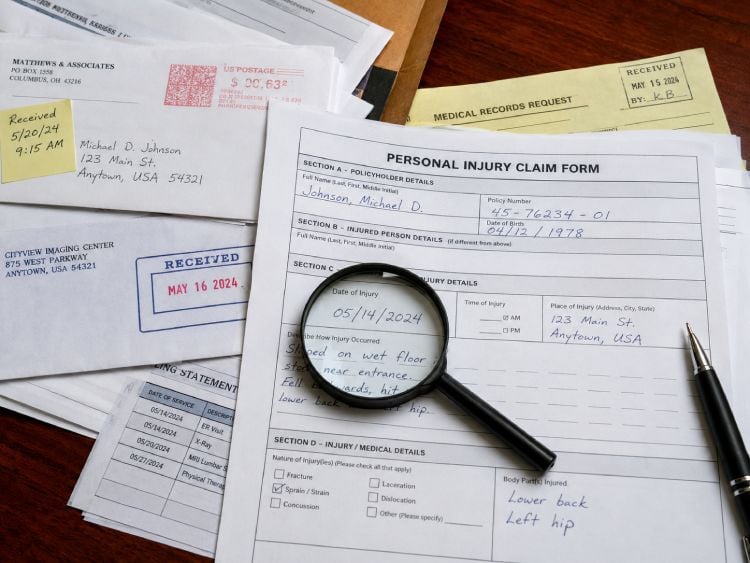
Getting injured at work is stressful enough, but at least you can expect workers’ compensation to step in and help cover medical bills and lost wages.
Then, the denial letter arrives.
It’s a confusing, frustrating moment with real financial pressure. It can feel like the whole system’s working against you.
The good news is that a denied workers’ comp claim is not the end of the road. Many claims are initially rejected, and a strong number of those decisions get overturned when handled correctly. What matters most is how you respond next.
Taking the right steps early, especially speaking with an experienced workers’ compensation attorney, can make a meaningful difference in how your case moves forward. From identifying why your claim was denied to building a stronger appeal, legal guidance can help you avoid costly mistakes.
In this article, we’ll walk you through why claims get denied, what steps to take immediately, how the appeal process works, and how the right legal support can strengthen your position.
Common Reasons a Workers’ Comp Claim Is Denied
Understanding why your claim was denied is the first step to fixing it. Insurance companies rarely reject claims without a stated reason, but those reasons are often incomplete, misleading, or based on weak evidence.
Here are a few of the most common reasons why workers’ compensation claims are rejected.
Missed Deadlines
Workers’ compensation claims come with strict timelines. You typically need to report your injury within a short window and file paperwork within another. If either step is delayed, the insurer may deny the claim outright, even if the injury is legitimate.
In many cases, workers don’t realize how short these deadlines are or assume they have more time than they actually do. Unfortunately, even a delay of a few days can raise red flags. Insurers may argue that the injury was not serious enough to report immediately or question whether it happened at work at all.
Disputes About Whether the Injury Is Work-Related
Another common workers’ comp denial reason is the argument that the injury did not happen on the job. It may include claims that the injury happened outside of work, arguments that a pre-existing condition caused the issue, or disputes about whether job duties contributed to the injury.
These disputes often come down to documentation and medical opinions. For example, if there is no clear incident report or if your medical records do not explicitly connect the injury to your job, the insurer may use that gap to deny the claim.
Lack of Medical Evidence
Your claim depends heavily on medical records. If documentation is incomplete, inconsistent, or unclear, the insurer may argue there is not enough proof to approve benefits. Gaps in treatment, missed appointments, or delays in seeing a doctor can also weaken your case. Insurers often look for consistency.
If your records do not clearly show how the injury occurred and how it affects your ability to work, they may use that as a basis for denial.
In some cases, the issue is not the absence of care but how it is documented. Vague notes or missing details can create enough uncertainty for an insurer to reject the claim.
Employer Disputes
In some cases, the employer challenges the claim directly. They may question how the injury happened, whether it occurred during work hours, or whether workplace policies were followed. Employers might also dispute claims if they believe the injury could lead to increased insurance costs.
A simple disagreement or lack of internal documentation can trigger a workers’ comp claim denial.
Failure to Seek Immediate Medical Attention
When there is a delay between the injury and medical treatment, insurers often use that gap to question how serious the injury is or whether it is work-related. For example, if you continue working for days or weeks before seeing a doctor, the insurer may argue that the injury was minor or unrelated to your job. Prompt medical attention helps create a clear timeline that supports your claim.
Incomplete or Incorrect Paperwork
Errors in your claim forms, missing details, or inconsistencies can lead to rejection. Even small mistakes—incorrect dates, unclear descriptions of the injury, missing supporting information, etc.—can create enough doubt for an insurer to deny the claim.
Once a discrepancy appears, insurers may use it to question the accuracy of the entire claim.
Independent Medical Examination Conflicts
Insurance companies may require an independent medical examination (IME), often called a “Section 12” exam in Illinois. If that doctor’s opinion conflicts with your treating physician, the insurer may rely on that report to justify denial.
These examinations are often requested by the insurance company, and the findings may not always align with your own doctor’s assessment. When there is a conflict, the insurer may favor the opinion that supports denying or limiting benefits.
IMEs are one of the more complex areas of a workers’ comp claim and often require strong medical evidence to challenge.
What to Do After a Workers’ Comp Claim Denial
What you do right after receiving a denial letter can shape the entire outcome of your case. Don’t just wait and see what happens next. Delays, missed deadlines, or incomplete responses can make it harder to recover benefits later.
Taking a structured approach early helps you stay in control and puts you in a stronger position if you decide to move forward with an appeal.
Review the Denial Letter Carefully
Start by identifying exactly why your claim was denied. The denial letter should outline the reason and provide details about your appeal rights and deadlines.
Do not skim this. The entire strategy for your appeal depends on addressing that specific reason. Look for:
- The exact explanation for the denial
- Any missing documentation the insurer referenced
- Deadlines for filing an appeal
- Instructions on how to respond or request a review
When you correctly understand the denial, you can focus your efforts on correcting the issue instead of guessing what went wrong.
Consult a Workers’ Compensation Attorney
Many people try to handle a workers’ comp appeal alone, not realizing how technical the process can be.
An experienced workers’ compensation attorney can quickly identify weaknesses in your claim, explain your options, and guide your next steps. Early legal input can also help you avoid missteps that may limit your ability to recover benefits later, and even a short consultation can provide clarity on whether your denial is likely to be overturned and what strategy makes the most sense moving forward.
Gather and Organize Evidence
Strong evidence is the foundation of a successful appeal. You want to fill in the gaps that led to the denial and build a clearer, more complete picture of your injury.
Evidence for your claim may include the following:
- Medical records and treatment history
- Workplace incident reports
- Photos, videos, or other documentation of the injury
- Witness statements from coworkers
- Communication with your employer about the injury
The goal is to directly counter the reason for denial. If the insurer questioned whether the injury was work-related, your evidence should focus on proving that connection. If the issue was lack of documentation, this is your opportunity to strengthen the record.
Continue Medical Treatment
Consistent medical care supports your claim and shows that your injury is ongoing. Stopping treatment or skipping appointments can raise questions about the severity of your injury, so follow your doctor’s recommendations and keep records of all visits and treatments. Ongoing care helps create a clear medical timeline that supports your case during the appeal process.
File an Appeal Promptly
Deadlines in workers’ comp cases are strict. Missing one can eliminate your ability to recover benefits.
Filing your appeal promptly gives you more control over the process and helps keep your case moving forward. When submitting your appeal, focus on providing a complete and well-supported response that directly addresses the denial.
Working with an attorney at this stage can help you avoid incomplete filings, missing documentation, or procedural errors that could delay or weaken your case.

How to Appeal a Denied Workers’ Comp Claim
While the exact process varies by state, most appeals follow a similar structure. An appeal usually requires deadlines to be met, supporting records to be submitted, and a clear response to the reason your claim was denied. Knowing what to expect helps you avoid missteps that could hurt your case.
Step 1: Filing an Appeal
The first step is submitting a formal appeal within the required deadline. Missing this window can permanently close your case.
At this stage, the goal is to show why the denial was wrong and back that up with information and evidence that addresses the insurer’s stated reason for rejecting the claim.
The appeal typically includes:
- A written request for review
- Supporting documentation
- Any additional evidence that addresses the denial reason
- Medical records or updated treatment notes
- A copy of the denial letter and claim-related paperwork
Filing early can give you more time to correct errors, gather records, and work with an attorney if legal help becomes necessary.
Step 2: Pre-Hearing Procedures
After filing, both sides begin preparing for a hearing. This stage may involve gathering medical records, securing expert opinions, and collecting witness statements.
This part of the process often shapes the strength of the case before anyone enters a courtroom or hearing room. It’s where missing records are identified, timelines are clarified, and both sides begin building their arguments.
Some cases may also go through mediation or settlement discussions before reaching a formal hearing. Depending on the situation, this phase may include requests for additional records, written statements from the injured worker or their coworkers, expert evaluations, and follow-up medical opinions. Settlement discussions or informal negotiations may follow.
The stronger and more organized your evidence is at this point, the better prepared you will be if the case moves forward.
Step 3: Hearing Before a Judge or Board
If the case moves forward, a workers’ compensation judge or board reviews the evidence, and the facts are presented in a more formal setting. Both sides may have the opportunity to explain their position, submit records, and challenge the other side’s evidence. It may include testimony from a variety of sources (you, witnesses, supervisors, etc.), medical expert opinions, documentation of the injury and its impact, and arguments from attorneys representing each side.
The strength of your evidence and how it is presented can significantly influence the outcome. Even valid claims can run into problems if key facts are missing or poorly explained.
Step 4: Decision & Further Appeals
After the hearing, the judge issues a decision. If the appeal is denied again, you may have the option to pursue a higher-level appeal. At that point, the case may move into a more technical phase that focuses on legal arguments, procedural issues, or whether the evidence was properly considered.
Depending on the circumstances, next steps may include:
- Reviewing the judge’s written decision in detail
- Identifying errors in the ruling or procedure
- Filing a request for further review with a higher board or court
- Submitting additional legal arguments through an attorney
- Exploring whether settlement remains an option
Each level becomes more complex, which is why many people seek legal help early in the process.
Why Get a Workers’ Comp Lawyer for a Denied Claim?
A denied claim is a legal dispute, and the way it is handled can directly impact whether you recover benefits or walk away empty-handed.
Many people try to manage the appeal process on their own, only to realize too late how complex it becomes. From strict deadlines to evidence requirements and formal hearings, each step introduces opportunities for mistakes.
Working with an experienced workers’ compensation attorney can help level the playing field. It gives you guidance, structure, and advocacy at a time when the insurance company already has professionals protecting its interests.
Case Evaluation & Strategy
An attorney reviews your denial, identifies what went wrong, and builds a strategy to challenge it. They look at how your claim was presented, whether key details were missing, and how the insurer justified its decision.
With that insight, your attorney can pinpoint weaknesses in the original claim, identify what evidence is needed to strengthen your case, and develop a plan that directly addresses the denial reason. This strategic approach helps avoid repeating the same issues that led to the initial rejection.
Evidence Collection & Documentation
One of the biggest challenges in an appeal is building a clear and consistent record. An attorney helps organize and present information in a way that supports your claim. Legal teams work with medical providers, gather records, and obtain expert opinions that strengthen your case, which may include:
- Coordinating with doctors to clarify how the injury is work-related
- Obtaining detailed medical opinions or reports
- Collecting employment and incident records
- Securing witness statements that support your version of events
Stronger documentation can shift how your claim is viewed during the appeal.
Handling Communication
Insurance companies are trained to protect their bottom line. An attorney manages communication to prevent statements that could be used against you.
Without legal guidance, it’s easy to say something that may be misunderstood or taken out of context. An attorney helps control how information is shared and keeps communication focused on supporting your claim. They will respond to requests from the insurance company, ask the right clarifying questions about your injury or treatment, and manage written and verbal communication throughout the case.
Having a professional handle these interactions can reduce stress and help protect your position.
Managing the Appeals Process
From filing forms to meeting deadlines, the workers’ compensation appeal process requires precision. Legal guidance helps you avoid mistakes that could delay or weaken your claim.
An attorney keeps your case on track by:
- Preparing and submitting required paperwork correctly
- Tracking deadlines and procedural requirements
- Organizing evidence for review
- Making sure your appeal follows the correct legal process
This level of organization can make a significant difference, especially in more complex cases.
Representation at Hearings
If your case goes to a hearing, an attorney presents your case, questions witnesses, and challenges opposing evidence.
A hearing involves presenting facts clearly, responding to arguments from the other side, and making sure your evidence is properly considered. Your attorney can prepare you for testimony so you know what to expect, present arguments that support your claim, cross-examine witnesses or medical experts, and address issues raised by the judge or opposing side. That type of strong representation can influence how your case is understood and evaluated.
Negotiation & Settlement
In some cases, a settlement may be an option. An attorney can evaluate offers and negotiate for a result that reflects the full impact of your injury.
Insurance companies may offer settlements that do not fully account for your medical needs or lost income. Having an attorney involved helps you assess whether an offer is fair. They will review settlement offers in detail, estimate the long-term impact of your injury, negotiate for higher compensation, and advise you on whether to accept the settlement or continue the appeal process.
With the right guidance, you can make more informed decisions about how to move forward.
Workers’ Compensation Claim Denial: FAQs
Why Do Workers’ Comp Claims Get Denied?
Workers’ compensation claims are often denied due to missed deadlines, lack of medical evidence, disputes about whether the injury is work-related, or errors in paperwork. In many cases, the denial is based on incomplete information rather than the full facts of the injury.
How Often Is Workers’ Comp Denied?
Workers’ comp denial rates vary by state and by case type. However, initial denials are not uncommon, particularly in cases involving disputed injuries or limited documentation. Many claims are later approved through the appeals process.
Can I Reapply Instead of Appealing?
In most cases, filing an appeal is the correct path. Reapplying for workers’ comp may not address the original denial reason and can lead to the same outcome. Reviewing your options with an attorney can help determine the best approach.
How Long Does the Appeal Process Take?
The timeline of the workers’ comp appeal process depends on the complexity of the case and the state’s system. Some appeals resolve in a few months, while others take longer if hearings or additional reviews are required.
Do I Need a Lawyer for a Workers’ Comp Appeal?
While not required, legal guidance becomes increasingly important once a claim is denied. The appeals process involves legal standards, evidence requirements, and procedures that can be difficult to navigate alone.
What Happens If I Lose My Appeal?
If your workers’ comp appeal is denied, you may have the option to pursue a higher-level review or explore other legal avenues. The next steps depend on your state’s laws and the details of your case.
Can I Work While Appealing a Denied Claim?
In some situations, you may be able to work while your appeal is pending. However, your ability to work and the type of work you perform can impact your benefits and your case.
Does My Employer Get Notified About My Appeal?
Yes, your employer and their insurance provider are typically involved throughout the appeals process. They may respond to your appeal and participate in hearings.

Contact an Experienced Chicago Workers’ Comp Attorney Today
A workers’ compensation denial doesn’t mean your case is over. However, your claim needs to be strengthened and presented more effectively if you want to improve your chances of recovering the benefits you need to move forward.
Has your workers’ comp claim been denied? If so, we’re here to help.
At Vasilatos Injury Law, our experienced workers’ compensation attorneys are focused on helping injured workers understand their options, pursue the benefits they deserve, and move forward after a work injury. We have represented hundreds of injured clients and obtained millions of dollars in awards for our clients in Chicago and across Illinois.
Our workers’ comp attorneys have experience in all aspects of workers’ compensation law, and we are dedicated to helping our clients get the best possible compensation. Regardless of the nature of your case, you can rely on us to guide you toward a favorable outcome for you and your family.
Contact us today to schedule a free consultation.



Leave a Comment